

Psychology & Neuroscience
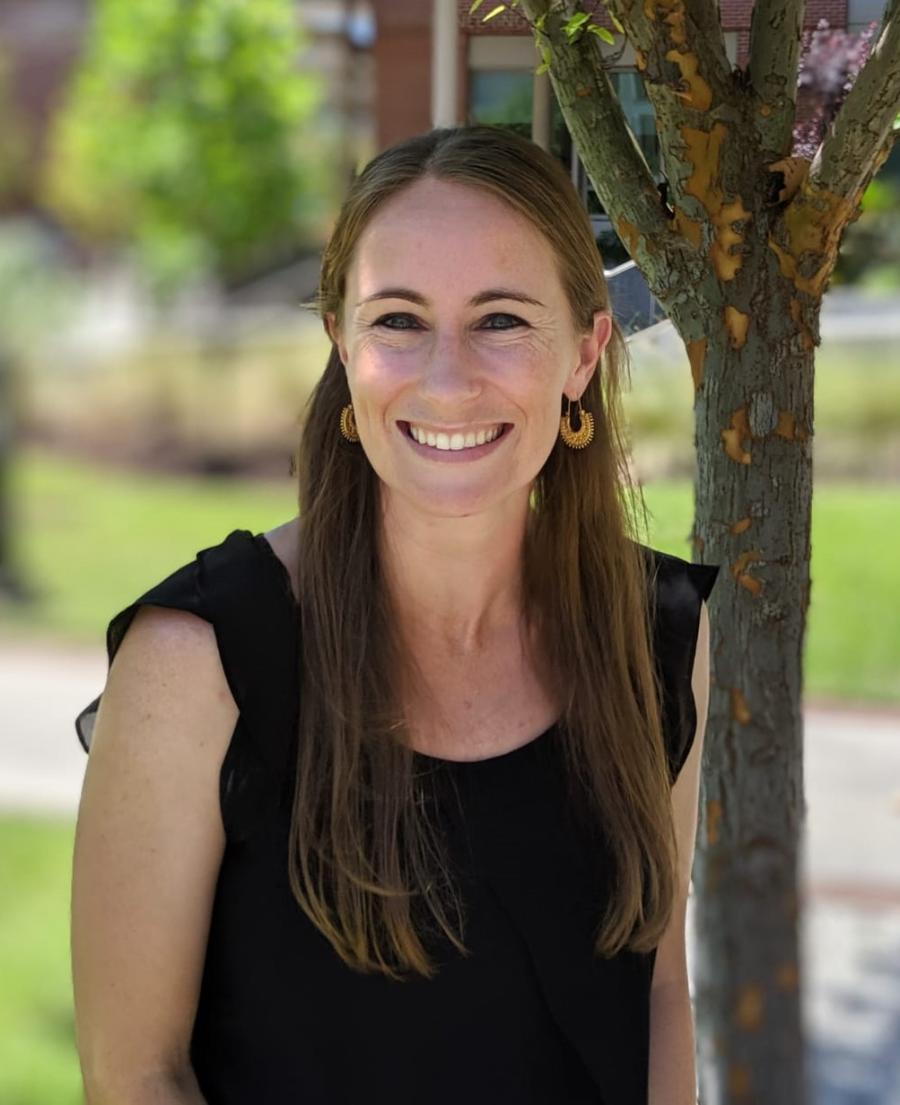
Brittany Kuhn Ph.D.
- Assistant Professor of Psychology & Neuroscience
Education
Postdoctoral Research Associate, Medical University of South Carolina, 2019-2025
Ph.D., University of Michigan, 2019
M.S., University of Texas at Dallas, 2013
B.S., Virginia Tech, 2010
Biography
Dr. Kuhn completed her doctoral training at the University of Michigan under the guidance of Dr. Shelly Flagel. Using a rodent behavioral mode, she assessed the cortico-thalamic circuitry mediating individual variation in incentive salience attribution and relapse propensity. Following completion of her degree, she joined the lab of Dr. Peter Kalivas at the Medical University of South Carolina. While there, she obtained a K99/R00 Pathway to Independence grant assessing the cell and circuit-specific adaptations associated with both resiliency and vulnerability to opioid use disorder (OUD) using a novel rodent model of individual variation. In addition to her research ventures, Dr. Kuhn has served on several institutional organization committees for science outreach to the community.
Academic Interests and Research
Dr. Kuhn’s main research interest is interrogating the neurobiological states and genetic regulation of both vulnerability and resiliency to OUD, the latter of which remains understudied. She accomplishes this through several mechanisms utilizing both rat and mouse behavioral models of addiction. During her post-doctoral training, she co-created a novel rat model that utilizes a non-linear network-based clustering method to assess how the interaction of several behaviors across the different phases of opioid addiction confers vulnerability or resiliency to OUD. This model uniquely captures the behavioral and diagnostic heterogeneity reflective of human OUD. Using this model, she assesses phenotypic differences in neuroplastic adaptations (e.g., dendritic spines, extracellular matrix, microglia) and circuit regulation, with the ventral pallidum (VP) being a prime region of interest. Through collaborative efforts, genetic variants associated with specific OUD behaviors have been identified, and the functional regulation of these variants to OUD propensity is of particular interest. Lastly, using transgenic mouse lines, Dr. Kuhn examines VP cell and circuit-specific regulation over heroin-seeking behavior. Technical expertise in the lab includes various rodent behavioral assays of drug addiction in both rats as well as mice, molecular assays of neuroplasticity, confocal microscopy, chemogenetics and behavioral pharmacology.
Please see more information at: Neuroplasticity of addiction
Select Publications
Hodebourg R, Scofield M, Kalivas PW, Kuhn BN. Nonneuronal contributions to synaptic function. Review. Neuron. 2025.
Kuhn BN, Cannella N, Chitre AS, Nguyen MMH, Cohen K, Chen D, Peng B, Ziegler KS, Lin B, Johnson BB, Sanches TM, Crow AD, Lunerti V, Gupta A, Dereschewitz E, Soverchia L, Hopkins JL, Roberts AT, Ubaldi M, Abdulmalek S, Kinen A, Hardiman G, Chung D, Polesskaya O, Solberg Woods LC, Ciccocioppo R, Kalivas PW, Palmer AA. Genome-wide association study reveals multiple loci for nociception and opioid consumption behaviors associated with heroin vulnerability in outbred rats. Molecular Psychiatry. 2025.
Kuhn BN, Cannella N, Crow AD, Lunerti V, Gupta A, Walterhouse SJ, Allen C, Chalhoub RM, Roberts AT, Dereschewitz E, Cockerman M, Beeson A, Nall RW, Hardiman G, Palmer AA, Solberg Woods LC, Chung D, Ciccocioppo R, Kalivas PW. Multi-symptomatic modeling of heroin use disorder in rats reveals distinct behavioral profiles and neuronal correlates of heroin vulnerability versus resiliency. American Journal of Psychiatry. 2025.
Cannella N, Tambalo S, Lunerti V, Scuppa G, de Vivo L, Kuhn BN, Hardiman G, Solberg Woods LC, Chung D, Kalivas PW, Soverchia L, Ubaldi M, Bifone AG, Ciccocioppo R. Long-access self-administration induced region specific grey matter volume reduction and microglial reaction in the rat. Brain, Behavior and Immunity. 2024.
Kuhn BN, Cannella N, Crow AD, Roberts AT, Lunerti V, Allen C, Nall RW, Hardiman G, Solberg Woods LC, Chung D, Ciccocioppo R, Kalivas PW. Novelty-induced locomotor behavior predicts heroin addiction vulnerability in male, but not female, rats. Psychopharmacology. 2022. DIO: 10.1007/s00213-022-06235-0.
Allen C*, Kuhn BN*, Cannella N*, Crow AD, Roberts AT, Lunerti V, Ubaldi M, Hardiman G, Solberg Woods LC, Ciccocioppo R, Kalivas PW, Chung D. Network-based discovery of opioid use vulnerability in rats using the Bayesian Stochastic Block Model. Frontiers in Psychiatry. 2021. DIO: 10.3389/fpsyt.2021.745468.
Complete list of publications: https://www.ncbi.nlm.nih.gov/myncbi/1N53DZ6Zuqdkc/bibliography/public/
Research Funding
K99/R00 DA057390- Pathway to Independence Award
PI: Brittany N. Kuhn
Neurobiological mechanisms underlying resiliency and vulnerability to opioid use disorder
Awards
Travel Award, European Behavioral Pharmacology Society meeting 2023
Travel Grant, Center for Global Health, Medical University of South Carolina 2022
Travel Award, Winter Conference on Brain Research meeting 2022
Travel Award, International Behavioral Neuroscience Society meeting 2018
Travel Award, Society for Neuroscience Trainee Professional Development Award 2017
Travel Award, Cold Spring Harbor Laboratory, Neuroscience of Addiction Course 2016
Graduate Students
Will be accepting students for Fall 2026!
Courses
NSC/PSY 4319- Clinical Neuroscience
- Contact Information
- Brittany_Kuhn@baylor.edu