

Department of Psychology & Neuroscience
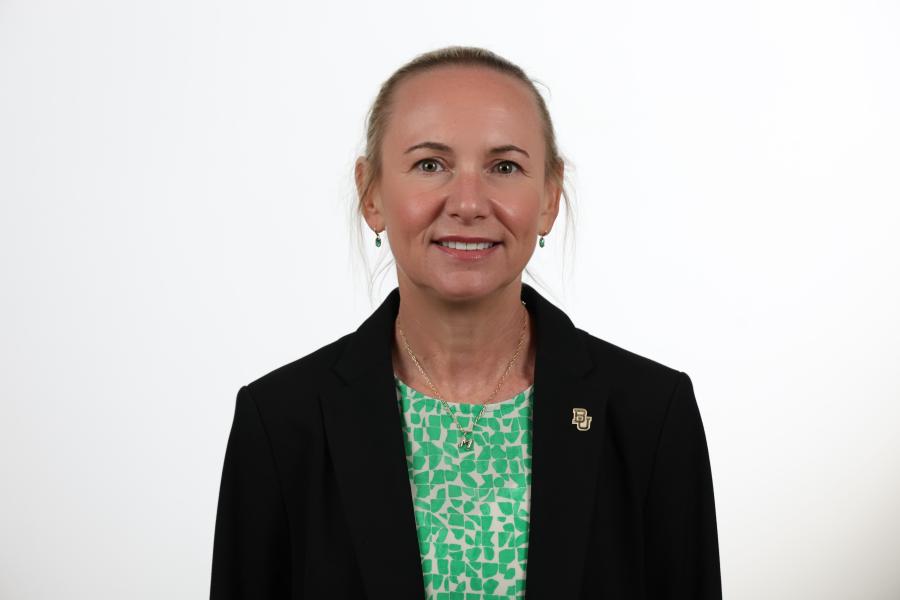
Masha Gartstein Ph.D.
- Department Chair
- Professor of Psychology & Neuroscience
EDUCATION
Ph.D. University of Cincinnati, 1997
Postdoctoral Fellowship, University of Oregon, 1999
BIOGRAPHY
Dr. Gartstein received her doctorate in Clinical-Developmental Psychology from the University Cincinnati, with her graduate studies focused on psychosocial adjustment of children with chronic medical conditions and their families. She completed her clinical internship at the Oregon Health Sciences University, and postdoctoral training at the University of Oregon, where her work focused on temperament development and emerging psychological symptoms/disorders. She also pursued this program of research while a member of the Washington State University Department of Psychology. Dr. Gartstein joined the Baylor faculty in 2025.
RESEARCH
Dr. Gartstein’s research continues to focus on temperament development and developmental psychopathology, with more recent studies emphasizing biological foundations, including related brain activity, measured via electroencephalogram (EEG) recording, and prenatal exposure effects (e.g., stress). She also studies the contribution of contextual factors, parent-child interactions and cultural influences chief among these.
More information about her research please visit the Baby Bear Lab website.
RECENT PEER-REVIEWED PUBLICATIONS
Pham, C., Mattera, J., Waters, C., Crespi, E., Madigan, J., Lee, S.Y., Gartstein, M.A. (2025). Advancing the study of maternal prenatal stress phenotypes and infant temperament outcomes. Developmental Psychobiology, 67, e70035.
Mattera, J.A., Erickson, N.L., Barbosa-Leiker, C., & Gartstein, M.A. (2024). COVID-19 pandemic effects: Examining prenatal internalizing symptoms and infant temperament. Infancy, 29, 386–411.
Campagna, A. X., Desmarais, E. E., French, B., Underwood, J., Majdandžić, M., Beijers, R., de Weerth, C., Lee, E. G., Huitron, B., Ahmetoglu, E., Benga, O., Raikkonen, K., Heinonen, K., Gonzalez-Salinas, C., Slobodskaya, H., Kozlova, E., Linhares. M. B. M., Lecannelier, F., Casalin, S., Acar, I., Tuovinen, S., Wang, Z., Giusti, R. M. L., Park, S., Han. S., Putnam, S., & Gartstein, M. A. (2023). Temperament and behavior problems: A multilevel analysis of cross-cultural differences. Infant and Child Development, 32, e2443. https://doi.org/10.1002/icd.2443
Brown, K., & Gartstein, M.A. (2023). Microstate analysis in infancy. Infant Behavior and Development, 70, 101785. https://doi.org/10.1016/j.infbeh.2022.101785
Gartstein, M.A., Seamon, E., Mattera, J.A., Bosquet Enlow M., Wright, R.J., Perez-Edgar K., Buss, K.A., LoBue, V., Bell, M.A., Goodman, S.H., Spieker, S., Bridgett, D.J., Salisbury, A.L., Gunnar, M.R., Milner, S.B., Muzik, M., Stifter, C.A., Planalp, E.M., Mehr, S.A., Spelke, S.E., Lukowski, A.F., Groh, A.M., Lickenbrock, D.M., Santelli, R., DuRocher Schudlich, T., Anzman-Frasca, S., Thrasher, C., Diaz, A., Dayton, C., Moding, K.J., & Jordan, E.M. (2022). Using machine learning to understand age and gender classification based on infant temperament. PLoS ONE, 17, e0266026. https://doi.org/10.1371/journal.pone.0266026
Complete list of published works at my CV.
RECENT BOOKS/CHAPTERS PUBLISHED
Gartstein M.A. & Brown, K.L. (2023). Temperament. In B. Halpern-Felsher (Ed.) Encyclopedia of Child and Adolescent Health, pp. 195-207. Oxford: Elsevier.
Gartstein, M.A., Kirchhoff, C., & Lowe, M. (2024). Individual differences in temperament: A developmental perspective. In H.E. Fitzgerald, J.D. Osofsky, M. Keren, and K. Puura (Eds.), WAIMH Handbook of Infant and Early Childhood Mental Health: Biopsychosocial Factors, Volume 1, pp. 39-48. Cham, Switzerland: Springer Nature
Lengua, L.J. & Gartstein, M.A. (2024). Parenting with temperament in mind: Navigating the Challenges and Celebrating Your Child’s Strengths. American Psychological Association, Washington DC.
Lengua, L.J., Gartstein, M.A., Zhou, Q., Colder, C.R., Jacques, D.T. (2024). Temperament and Child Development in Context. Cambridge: Cambridge University Press.
CURRENT/RECENT GRANTS
R01 MH125800
Gartstein (PI)
2/1/22-1/31/27
Precursors of Anxiety: The Role of Lateralized Brain Activation and Maternal Sensitivity.
This is an intensive longitudinal project with bimonthly observational, EEG, and questionnaire data collection. The major goal of this ongoing study is to examine the development of precursors to early anxiety from infancy through toddlerhood, with a focus on frontal EEG, temperamental reactivity, and parenting behaviors as contributing factors.
NSF (BCS – 2017033/2016919)
Gartstein (PI)
9/15/20-12/14/25
Collaborative Research: Examining Behavioral and Neurophysiological Precursors of Effortful Control.
Collaborative site – BCS 2016919, Virginia Tech University, Martha Ann Bell (PI)
This longitudinal investigation addresses foundations of emerging self-regulation/executive functions, focused on contributions of frontal EEG, temperamental reactivity and parent-child interactions. The primary objective is to understand the role of approach/avoidance motivation and related emotions in shaping regulatory capacity in the toddler period.
NSF (BCS-1941582)
Perone (PI), Role: co-PI
9/30/20-09/29/25
Probing the Origins of Approach and Avoidance Processes: Brain, Behavioral, and Contextual Factors.
This longitudinal study addresses the contribution of approach/avoidance biases, neuronal organization, and parent-infant interactions to the top-down control over responses to approach/avoidance cues in preschool-age children. The primary aim is to identify the role of parent-child interactions in shaping the stability of approach/avoidance from infancy to early childhood, associations with the underlying neuronal organization, and the emergence of top-down control.
NSF (HRD–1936019)
Gartstein (PI)
9/19-09/25
ADVANCE Partnership Grant: Values-based Academic Leadership Trajectories for women in STEM (VAuLTS): The Northwest Regional Partnership.
This project has a two-fold objective: (1) increasing midcareer STEM women faculty engagement in career advancement and leadership policy/practice decision-making at doctorate-granting and community college/undergraduate institutions; (2) supporting policy/practice transformation promoting advancement of midcareer women faculty in STEM at the institutional level for all higher education partners, enhancing equity messaging. VAuLTS programming was designed to increase women’s representation at the highest levels of the STEM professoriate through regional partnerships and national dissemination, serving as a flagship model.
Graduate Student Recruitment:
Dr. Gartstein will review Ph.D. applications for Summer 2027 admission.
Postdoctoral Fellow:
Kaitlyn Campbell, Ph.D.
Graduate Students:
Precious Mathis, M.S. (PsyD Program)
Marco Ramirez Gonzalez, M.S. (PsyD Program)
Post-baccalaureate:
John Elmer, B.S.
- Contact Information
- Masha_Gartstein@baylor.edu
- Office Location
BSB B309.1
- Contact for Appointments
- Masha Gartstein